The three layers of the agentic web
How the emerging agentic internet separates use, intelligence, and control. UX is human trust. AX is machine trust. AIP is institutional trust.
This is how I am currently visualising the emerging structure of the agentic internet, a system of layers that separates use, intelligence, and control.
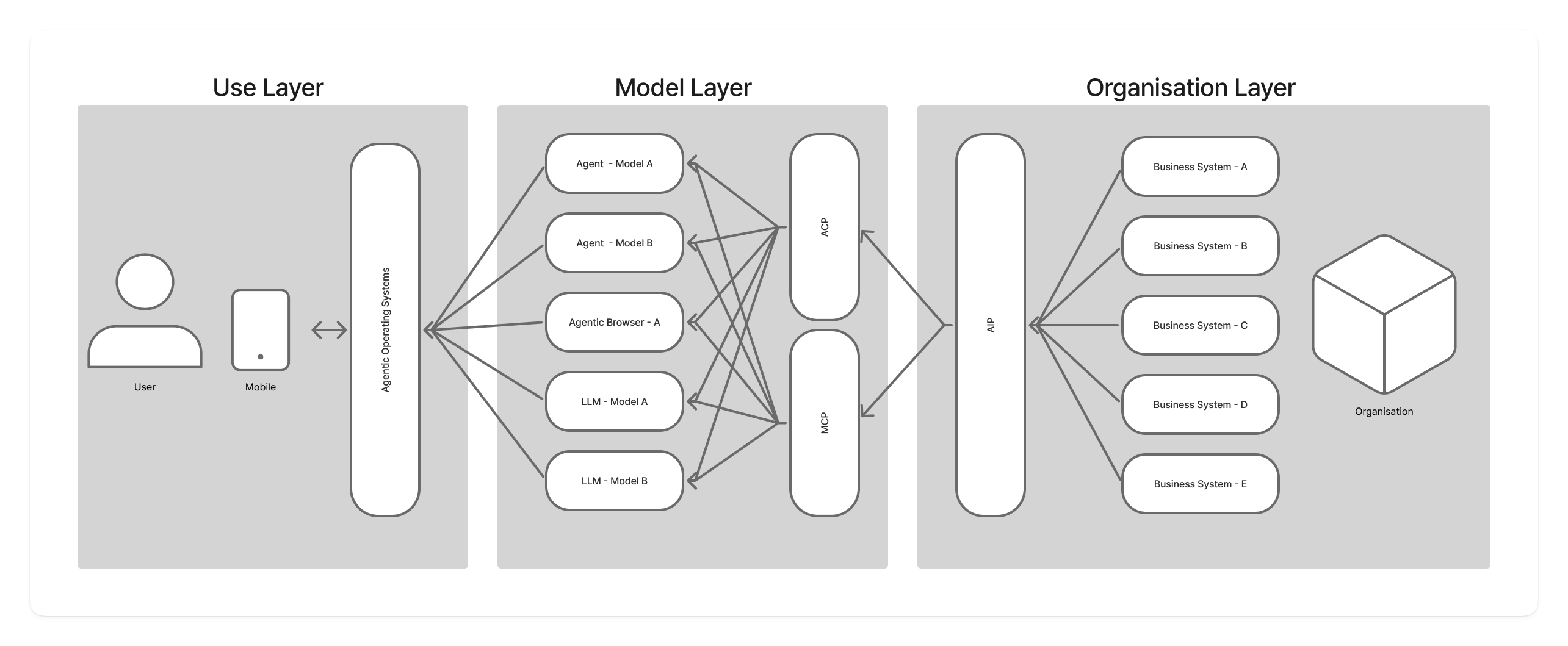
The Use Layer, human interface
This is the visible layer. Where humans interact with their devices, operating systems, and browsers. It is where UX lives, the human-to-agent interface.
Examples:
- Siri, Gemini on Android, ChatGPT app, Perplexity, Arc
- Voice, gesture, text, and multimodal input
Purpose: express intent. The human describes what they want, the system structures it as a request.
The Model Layer, intelligence and execution
This is the reasoning layer, the engine room of agency. It is where models, agents, and browsers interpret human intent and turn it into actions.
It includes:
- LLMs such as GPT, Gemini, Claude
- Agentic browsers
- Task-specific agents
- Protocols: MCP and ACP
MCP (Model Context Protocol) provides structured access to tools and data. Agent Communication Protocol concerns agent-to-agent communication. It is distinct from OpenAI and Stripe’s Agentic Commerce Protocol, also abbreviated ACP, which concerns checkout. Protocols connect systems; reasoning and planning happen in the models and applications using them.
The Organisation Layer, governance and control
This is the control surface for brands and systems. It is where data lives, decisions are recorded, and rules are enforced.
My proposed AIP (Agentic Interface Protocol) sits here, defining how external agents can read, interpret, and act on a brand’s data or services.
Purpose:
- Control, governance, and measurement
- Authentication and trust
- Value exchange and negotiation
The job of this layer is to make interactions auditable, permissioned and aligned with business logic. That requires working access controls, policy checks and records; naming a layer does not enforce it.
The layers in sequence
| Layer | Purpose | Core components | Protocols |
|---|---|---|---|
| Use Layer | Human intent | User, device, agentic OS | |
| Model Layer | Intelligence and execution | Agents, browsers, models | MCP, ACP |
| Organisation Layer | Control and governance | Brand systems, data, trust frameworks | AIP |
How it flows
- Humans express intent through devices and OS in the Use Layer.
- Models interpret and plan using context and inter-agent coordination in the Model Layer.
- Organisations define and control how agents act, transact, and measure outcomes in the Organisation Layer.
UX, AX and AIP
The definitions from Thinking in layers belong together here:
| Concept | What it means in this model | What matters |
|---|---|---|
| UX | The human experience of expressing intent, delegating and receiving outcomes | Trust, control, clarity and the ability to intervene |
| AX | The agent’s experience of the systems it interacts with | Data clarity, authentication, latency, cost and reliable execution |
| AIP | My proposed interface protocol for governed exchanges with organisations | Permission, terms, attribution, audit and the return of value |
UX is where meaning meets mechanism. UX builds loyalty with people. AX builds reliability with agents. The agentic web will run alongside the human web, one visible, one often invisible.
MCP and AIP: context and conduct
The distinction explored in AIP vs MCP is useful: MCP is the plumbing that connects an AI application to tools and context; AIP is the commercial and governance contract I want at the organisation’s boundary.
The boundaries overlap. MCP’s June 2025 specification already includes optional authorisation for HTTP connections. An MCP server can sit at an organisation’s perimeter. The additional AIP question is how purpose, usage terms, measurement and value exchange become a consistent part of the interaction.
For example, an agent requests an extract from a publisher. The publisher authenticates the caller, checks the permitted use and any price, returns the agreed content and attribution, and records the exchange. A payment or licence can return value to the source. Declared intent and a log do not prove what happens after delivery: downstream obligations still need agreements, controls and a way to address misuse.
That is why I am interested in the protocol layer. Capability makes the exchange possible. The terms make it worth participating in.
Final thought
The agentic web mirrors the structure of society. Humans express wants. Agents negotiate on their behalf. Organisations set the rules of engagement.
UX is human trust. AX is machine trust. AIP is institutional trust.
Updated 07 October 2026